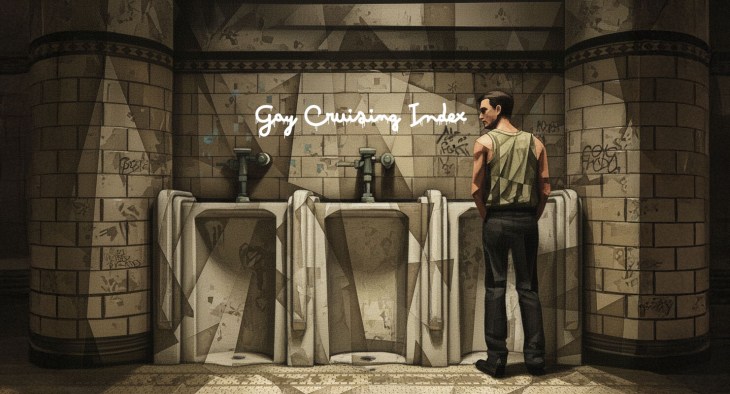

A new Global Gay Cruising Index from Erobella highlights the cities where men who are interested in men have the most opportunities for spontaneous encounters. The report evaluates 40 cities by counting cruising spaces such as saunas, cruising clubs, gay bars, and public parks, giving each city a score out of 40 based on the density of these venues.
London leads the list with a score of 29/40, thanks to its abundance of cruising-friendly parks and a strong mix of bars and saunas. Berlin follows with 26/40, well-known for its unapologetically open fetish clubs and nightlife. Paris comes in at 25/40 with an unusually high number of saunas, while Madrid and Barcelona round out the European leaders with vibrant, late-night cruising cultures.
New York is the highest-ranking U.S. city, but at just 14/40, it sits far below its European counterparts. San Francisco (11/40), Chicago (10/40), and Miami (8/40) rank even lower.
The study counts venues, not just the amount of people who use them. It doesn’t capture who feels welcome, who participates, or how inclusive these spaces are. In practice, many of these clubs, saunas, and parks attract a wide range of queer people who are interested in gay/bi men — trans men, cis men, bi men, queer men, and everyone in between. The index uses “gay” simply to describe the type of venue, not the identities of the visitors.
Cruising itself exists because, for a long time, society refused to create safe, public spaces for queer intimacy. Homophobia, criminalization, and social stigma pushed men who were interested in men into the shadows, where public parks, bathhouses, and hidden bars became the only places they could meet without risking arrest, violence, or being outed. Cruising grew out of necessity. It’s a survival strategy that eventually became its own culture, full of coded signals, rituals, and a sense of underground connection.
That culture was deeply disrupted in the United States during the HIV/AIDS crisis of the 1980s. In fear-driven crackdowns, cities like San Francisco and New York shut down many bathhouses and sex-positive spaces, cutting off what activists described as crucial “lines of communication” within the community. In contrast, many European countries kept saunas open and worked with LGBTQ+ groups to distribute safer-sex information, preserving a cruising infrastructure that continued to evolve.
These historical choices still shape the landscape today. Europe’s cruising culture remains diverse and robust, while the U.S., after losing so many of its original spaces, never fully rebuilt them. The 2025 Cruising Index reflects this legacy, showing not just where spontaneous encounters happen now, but how decades of policy and prejudice continue to influence queer connection around the world.

The post How the History of Necessity Shaped Cruising, And Why Europe Still Outpaces the U.S. appeared first on ROCK THE PIGEON.