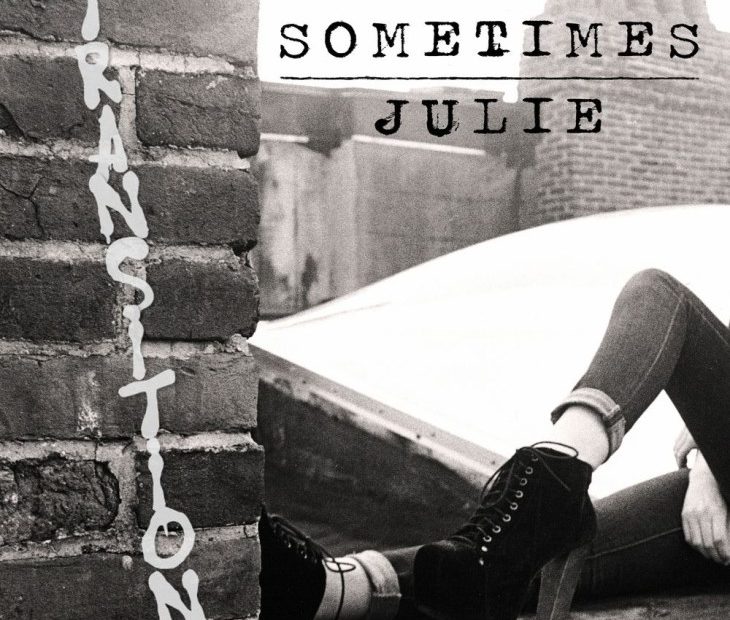
Sometimes Julie, the moniker of songwriting duo Monica Sorenson and Rick Walker, recently released a six-song EP titled Transition. The project feels quietly intentional, unfolding with patience and emotional clarity. Rock the Pigeon is excited to explore the record track by track, taking a closer look at how each song contributes to the EP’s reflective and intimate arc.
The record opens with “Carry Her,” a soulful ballad anchored by warm piano lines and a restrained, tender vocal performance. The song examines a relationship on unstable ground, one where two people struggle to align yet remain deeply drawn to each other. Like mismatched puzzle pieces, they continue choosing one another despite the emotional toll. They are too in love to be apart. “Carry Her” captures the weight of devotion and the vulnerability of staying, setting a thoughtful and emotionally grounded tone for the rest of the EP.

The mood lifts on the title track, “Transition,” where brighter piano lines and acoustic guitars create a sense of forward motion and possibility. The song centers on finding the courage to live as your authentic self in a world that often demands conformity. The blend of acoustic guitar and piano is especially striking, working together to give the track warmth and clarity, and standing out as one of the most satisfying sonic moments on the EP. Vocally, the song leans into a folky tone that recalls Jill Sobule, and other singer-songwriters of that era, grounded yet expressive. Lyrically, “Transition” is about reclaiming agency and choosing change, even when that choice is met with resistance. It rejects outside judgment in favor of self-trust, emphasizing that personal freedom comes from within. When the song states, “The questions and the answers belong to you,” it feels like the emotional thesis of the track, a reminder that no one else gets to define your path.
“Before” continues the singer songwriter ballad sensibility while pushing the songwriting into more complex territory. The chord progressions are less predictable than on the previous tracks, creating subtle turns that pull the listener through both a musical and emotional arc. There is a sense of movement here that rewards close listening, as the song unfolds rather than settles. As the track builds toward the chorus, crashing cymbals and rising dynamics give the vocals space to cut through with real force, recalling the intensity of 1990s rock singer songwriters like Alanis Morissette. By the second verse, the vocal performance fully opens up, soaring with confidence and control. The range and emotional precision on display are striking. At its core, “Before” is a song about finding true love at the edge of collapse, locating connection and meaning even when the world feels like it is ending.
“I’m beyond thrilled to be able to share Transition with everyone.” said Sorenson. “Over the past two years, I’ve put my heart and soul into the writing, performance, and production of these songs, and I am so fortunate to have had the very talented Rick Walker and my Sometimes Julie family with me every step of the way to bring it all to fruition. It has truly been a labor of love!”

“I Dreamed of You” confronts grief in its most devastating form, the loss of a child. That sense of absence and longing carries through every line of the song, and the weight of it is unmistakable in the vocal delivery, which holds both restraint and quiet anguish. There is a rawness here that feels deeply personal, as if the emotion is being revealed rather than performed. Set in a minor key, the track introduces a level of intensity that stands apart from the rest of the record. The arrangement is cinematic and expansive, led by piano, voice, and a sweeping string section that amplifies the emotional gravity of the song. Nothing feels excessive, yet everything feels heavy. “I Dreamed of You” becomes a powerful centerpiece on the EP, fully immersing the listener in the pain and love bound up in a parent’s grief.
The last song on the record is a great closing song. “Finally the Rain” turns toward growth and release after grief. Centered on the loss of a parent, the song reflects on traveling home for the funeral of an estranged loved one and the complicated process of forgiveness that follows. There is a sense of reckoning here, of clearing the slate and allowing space for understanding, even when the past is marked by distance and unresolved pain. The vocal performance is once again a standout, resting gently over the piano and allowing the emotion to surface naturally. Both the voice and the piano feel exposed, carrying the weight of reflection and acceptance. It is a carefully written ballad that closes the emotional arc with honesty and restraint. When the line “Are you listening? I’m coming home” arrives; it lands with quiet power, capturing the song’s longing for connection and closure.
Listen to “Transition” by Sometimes Julie on Spotify now:
More ways to find Sometimes Julie:
________________________________________________
Written by Ryan Cassata
Submit a single, here.
Submit an EP or LP, here.
Submithub Coupon, here.
Request Your Song Be Used in a TikTok or Reel, here.
Intellijend Campaign Discount (Meta Ads), here.
The post Sometimes Julie’s Transition and the Power of Piano Ballads appeared first on ROCK THE PIGEON.